Philosophical Foundations of Psychotherapy
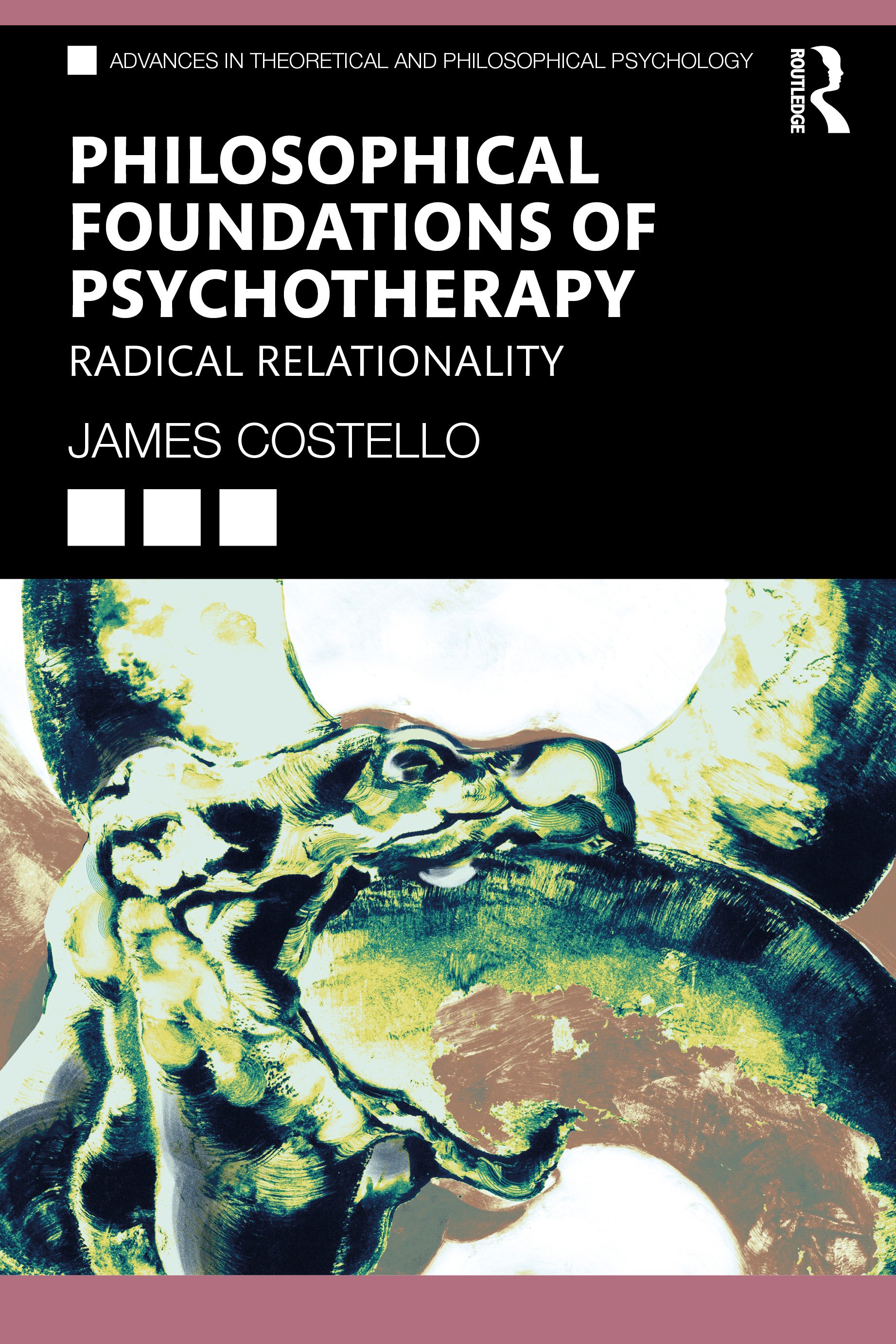
Philosophical Foundations of Psychotherapy: Radical Relationality begins with a question: are we taking relationships seriously enough?
Psychotherapy has long recognised that relationships matter. Yet much of our thinking still begins with the assumption that we are individuals first and relaters second — separate selves who subsequently enter into relationships with other people and the world. This book turns that assumption around.
Radical relationality begins with the relationship. We are not self-contained individuals who happen to relate. Who we are emerges through our histories, bodies, cultures, languages, places and relationships with others.
The book therefore steps back from particular therapeutic theories and techniques to examine the philosophical assumptions beneath them. It asks what we mean by a good life, freedom, meaning, identity, time and being with others — and what changes when psychotherapy understands the person as fundamentally relational rather than essentially separate.
The aim is not to offer another therapeutic model, technique or tool. It is to recover something more fundamental: a way of thinking about psychotherapy in which relationship is not simply the setting in which therapy happens, but constitutive of who we are.
Reception
Philosophical Foundations of Psychotherapy has received favourable scholarly recognition. Writing in the Journal of Theoretical and Philosophical Psychology, Gantt and Major describe it as a “well-crafted, tightly argued book” and as offering more than an introduction to philosophical reflection: a sustained exploration of how radical relationality can provide “steering guidance” for psychotherapy and some of the wider questions confronting psychology.
The book was subsequently nominated for the British Psychological Society Book Award.
International readership
Philosophical Foundations of Psychotherapy is finding a readership well beyond the UK and its original English-language publication. A Persian translation is now underway, bringing the book to a new linguistic and cultural readership.
The ideas travel
The book has also generated invitations to take its argument beyond its pages, including an invited paper on Radical Relationality at the British Society for Phenomenology Annual Conference and the invited Therapy Today Viewpoint, “A Return to Radical Relationality.”
Its arguments are beginning to appear in subsequent scholarship. Philosophical Foundations is cited in M. H. Klein’s 2025 book, Rethinking Cognitive Behavioral, Psychodynamic, and Existential Therapy, which develops a philosophical framework for bringing these three major therapeutic traditions into conversation.
More recently, radical relationality has itself been taken up as a framework for psychotherapy and clinical supervision. A two-part paper by Dana Rad and Gavril Rad in the International Journal of Supervision in Psychotherapy draws centrally on the concept in exploring power, context, recognition and agency in therapeutic practice.
Most importantly for me, Philosophical Foundations did not bring the argument to an end. It provided the intellectual ground from which my subsequent work on relational encounter has developed.
Related writing
A Return to Radical Relationality
Therapy Today, March 2026, 37(2), 70–72
Therapists have always valued relationships — but are we really taking them seriously enough? A development of the book’s central argument, exploring what radical relationality means for therapeutic practice.
Find the book
Philosophical Foundations of Psychotherapy: Radical Relationality
James Costello
Routledge, 2025